


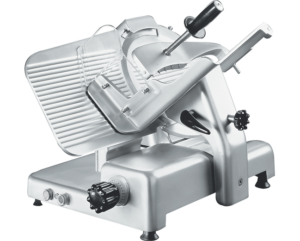
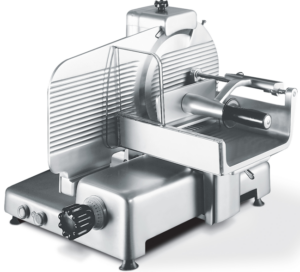


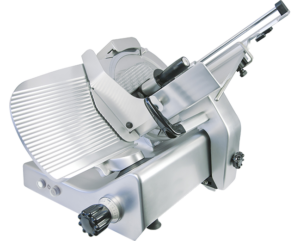
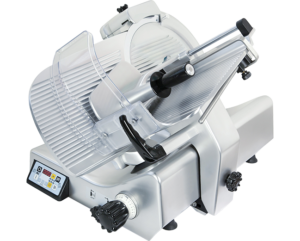
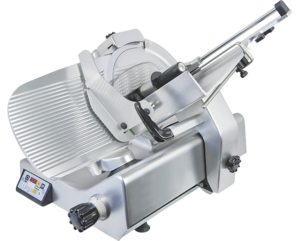
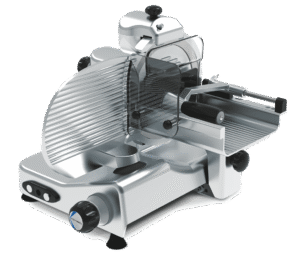
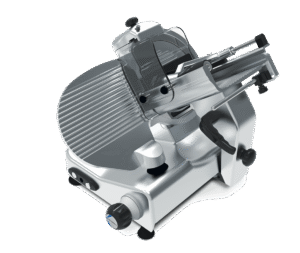
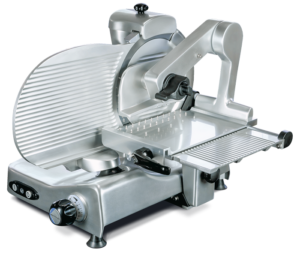
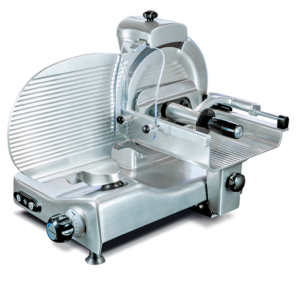
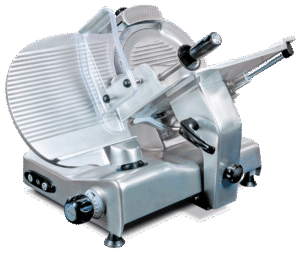
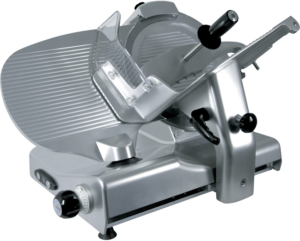
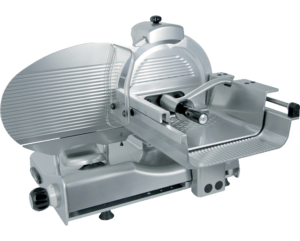
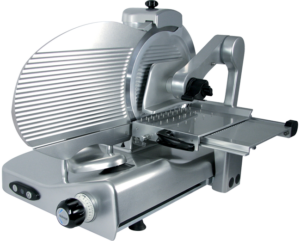
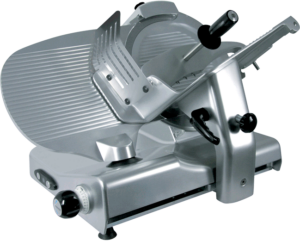
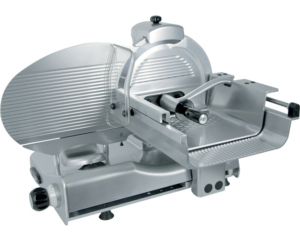
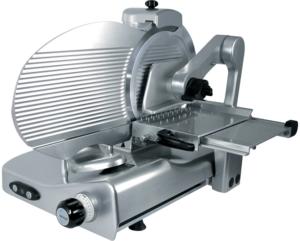
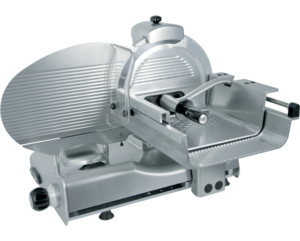
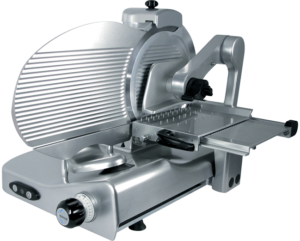
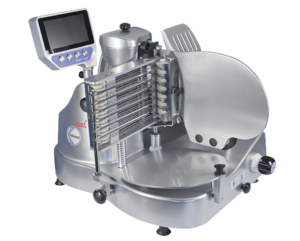
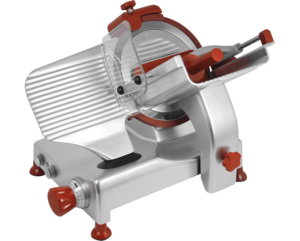
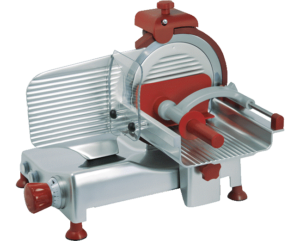
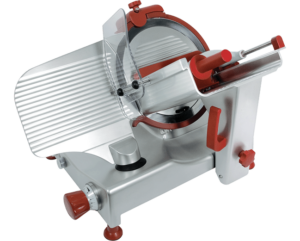
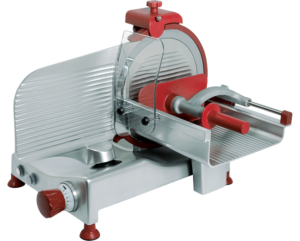
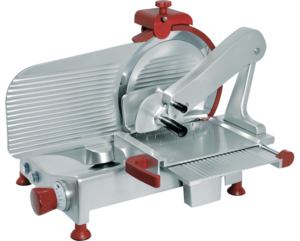
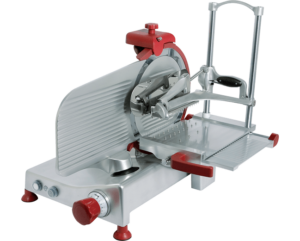

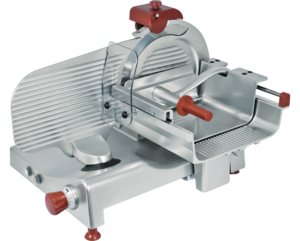
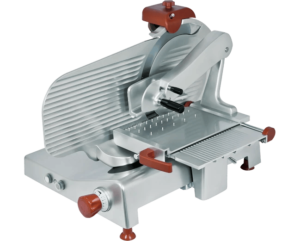
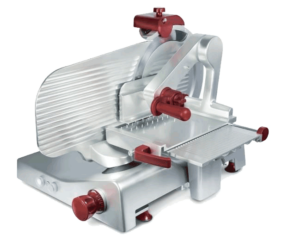
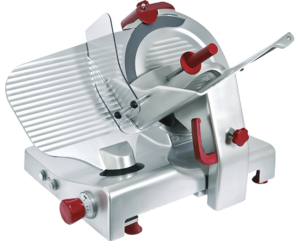

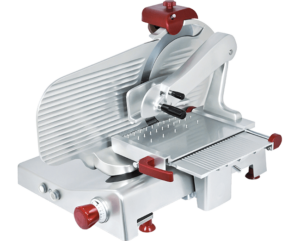
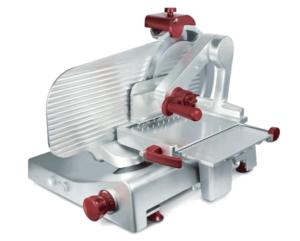
What makes the difference between a good slicer and an ordinary one?
- Certification kit – the machine must be equipped with User Manual and its Certi7cate of Compliance declaring that this is a product
- manufactured according to the European Directives and Standards in force at that time;
- Transmission noise – a good slicer must be silent even when fully operating;
- Large working surface to support the product and the slices;
- Fluency and no sticking points of carriage and last slice. The bump should not be present even with unbalanced loads;
- Loading height of the product – the lower it is the lower is the effort for the operator during the usage of the slicer;
- Look – a slicer is a working tool but also part of the furnishing in a shop, so it should look attractive and with an appealing design and a uniform and bright color. It shouldn’t have aesthetic failures;
- Blade – it is very important to use high quality in terms of material and processing techniques; the blade should not wave and its eccentricity to be reduced to minimum to obtain the best slicing reliability;
- Blade speed – the slower it is, the higher is quality of the cut with less waste of unsliced product; The product to be sliced must also be supported over the edge of the blade, to obtain a precise thicknesses of each slice and with homogeneity over its entire surface;
- Rigidity and planeness of the gauge plate – this feature must be strictly respected both for a precise cut and for the best security in covering the blade;
- Flowing lines on the gauge plate and blade cover – they must be suKciently deep and well-shaped to reduce friction during the cutting of the product;
- BV plate – just like the other plates the BV carriage must have a smooth sliding, secure locking, easy handling, appealing ergonomy and low maintenance;
- Ergonomic handles (pulls, knobs and levers) in their shapes and positions. Slicers should be easily handled and operated;
- Wide open space for cleaning – each part must be easily and safely cleaned, so there shouldn’t be any zone diKcult to reach or even inaccessible;
- Simplicity in disassembling (without tools) some parts (plate, last slice device, blade cover, sharpener, deQector, slice support) during the cleaning operations;
- Possibility to wash the machine with a water jet without any risk of rusting;
- There shouldn’t be any sharpened point (with the exception of the blade) which can injure the operator during the cleaning process.